Last Updated on 08/05/2026 by Ting Dalton
After spending two weeks on a summer road trip exploring Brittany and then driving further south to the Dordogne, I’m well and truly smitten. There aren’t many destinations I long to return to, but this corner of southwest France is one of the exceptions.
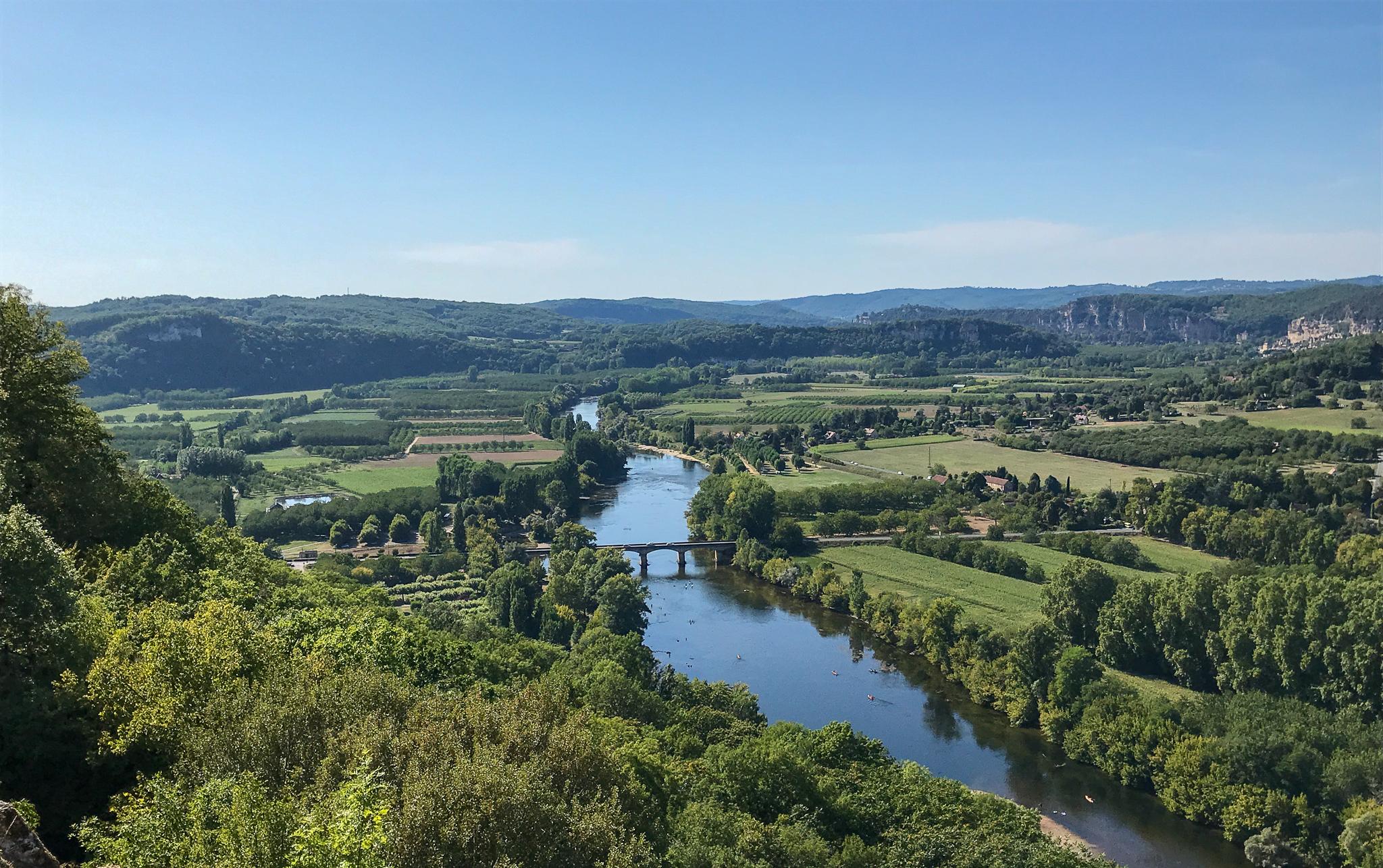
The Dordogne region has everything – prehistoric caves with paintings dating back to prehistoric times, medieval castles perched on limestone cliffs, some of the most beautiful villages and charming towns in France, and food that will make you want to cancel your return flight. It’s a place of rich history and natural beauty, and it deserves far more than a weekend. Here’s my tried-and-tested guide to the best things to do in the Dordogne.

Quick answer: the best things to do in the Dordogne
Short on time? These are the highlights you shouldn’t miss:
- Lascaux IV – a full-scale replica of the world’s most famous prehistoric cave paintings
- La Roque-Gageac – one of the most beautiful villages in France, built into a limestone cliff
- Château de Beynac – a 12th-century fortress with jaw-dropping views over the Dordogne valley
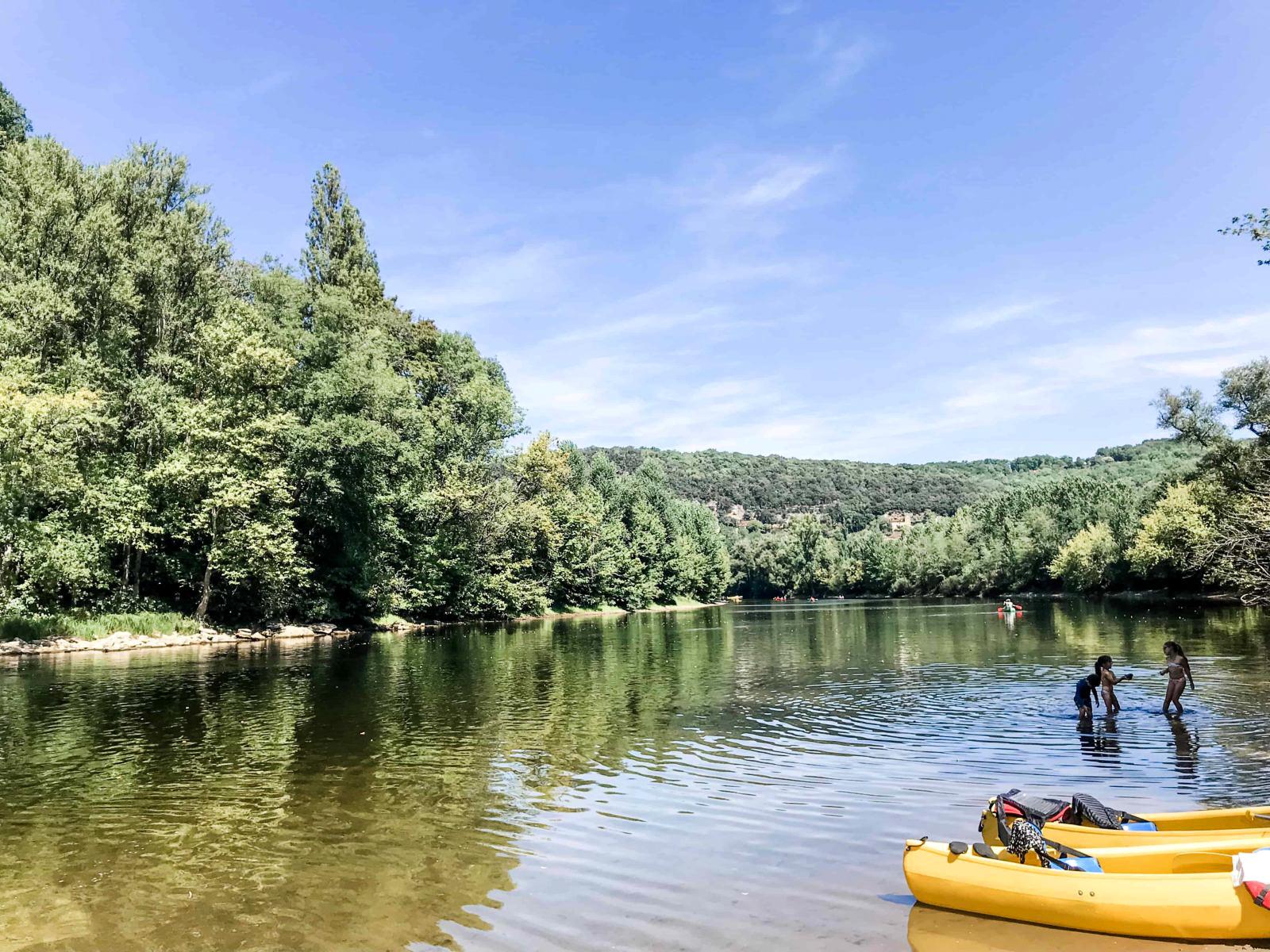
- Canoeing the Dordogne river – paddle past castles, medieval villages and lush countryside
- Sarlat market – foie gras, black truffles, walnut cake and Bergerac wines every Wednesday and Saturday
- Gardens of Marqueyssac – sculpted hedges, peacocks and the best panoramic views in the region
Wander medieval villages
Even though the Dordogne has been a popular destination for visitors for years, it has still retained its quintessentially French character – from the château-dotted countryside and the Bastides (fortified towns built in medieval Aquitaine) to the picturesque village streets we spent hours getting lost in. You’ll find historic buildings around every corner, from Renaissance townhouses to Romanesque churches. Some areas can be busy, but if you’re prepared to explore, there are still plenty of places off the beaten track.
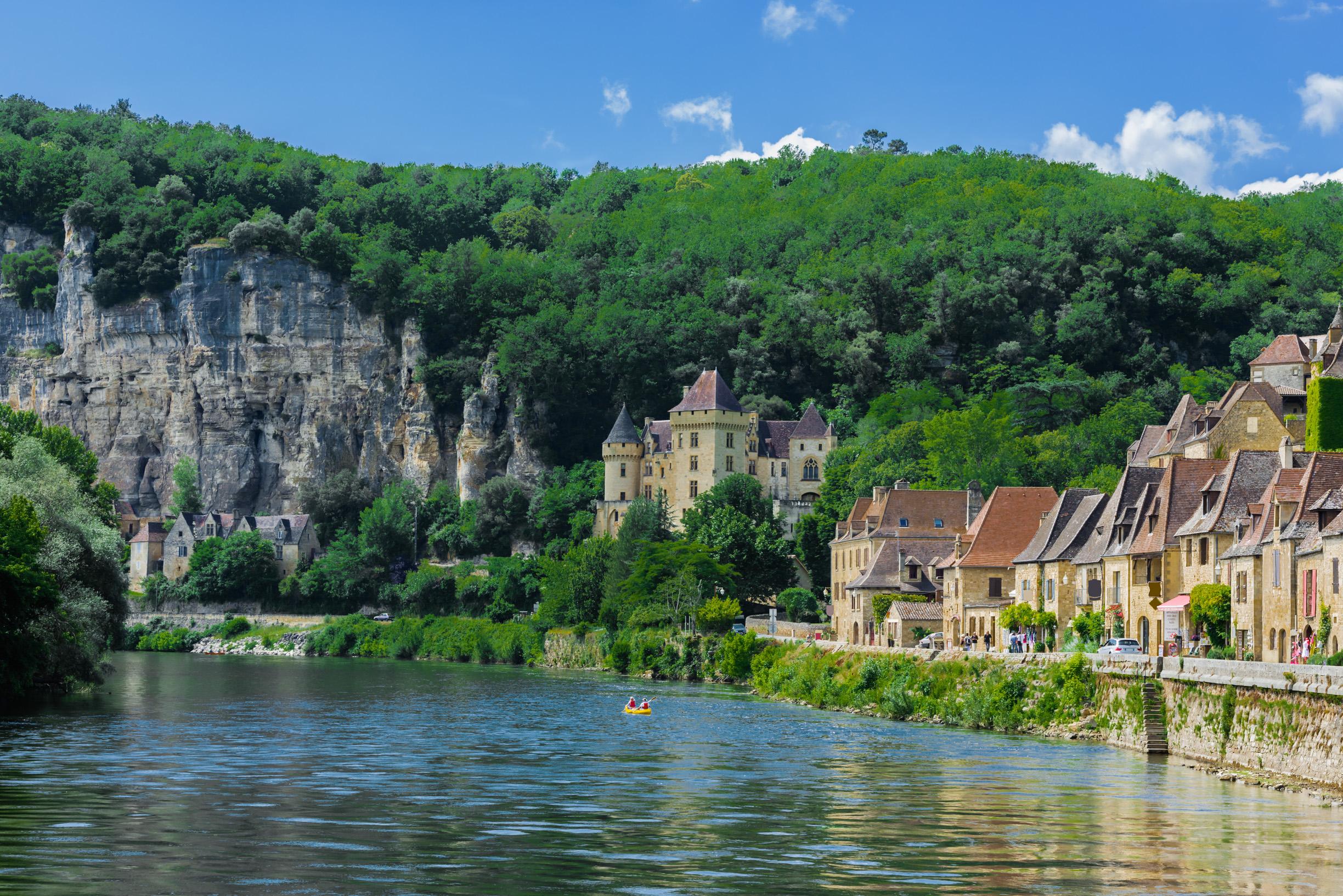
La Roque-Gageac
Listed as one of the most beautiful villages in France, La Roque-Gageac sits at the foot of a towering limestone cliff on the banks of the Dordogne River, about 8km south of Sarlat. The golden stone buildings look like they’ve been carved straight into the rock face, and the whole scene feels like something from a film set.
Climb the narrow lanes past the 14th-century church, and you’ll reach an unexpected tropical garden – palm trees, banana plants and bamboo all thrive here thanks to the south-facing cliff creating a natural microclimate. From the top, the views over the river are worth every step. Tip: Arrive late afternoon when the crowds thin out and parking frees up.
Sarlat-la-Canéda
Sarlat is the unofficial capital of the Dordogne’s Périgord Noir and one of the best-preserved medieval towns in France. Its honey-coloured buildings, winding alleys and Renaissance architecture make it a wonderful place to wander. It’s also the ideal base for exploring the wider region, with most major attractions within a 30-40 minute drive.
Beynac-et-Cazenac and Domme
Beynac-et-Cazenac rises dramatically above the river, its medieval streets climbing steeply towards the castle at the top (more on that below). Across the valley, the hilltop village of Domme offers some of the most expansive views over the Dordogne – we stayed in a gîte close to Domme and never tired of the scenery.
Explore the prehistoric caves
The Dordogne – particularly the Vézère valley – is home to one of the richest concentrations of prehistoric sites in Europe. The Dordogne and Vézère rivers have carved deep into the limestone over millennia, and the valley is a UNESCO World Heritage Site with more than 150 documented prehistoric sites including decorated caves, rock shelters and ancient habitation areas.
Lascaux caves
The original Lascaux cave was discovered in 1940 by four teenagers and contains over 600 animal figures and cave paintings dating back around 17,000 years. It was closed to the public in 1963 to protect the fragile artwork, but the modern visitor centre – Lascaux IV – opened in 2016 near Montignac-Lascaux and contains a full-scale replica created using advanced 3D scanning. The reproduction is extraordinary.
The guided tour through the reconstructed cave takes around 40 minutes, followed by interactive exhibition galleries. Allow about two hours for the whole visit. Adult tickets are around €22, children (5-12) €15, under 5s free. Book online in advance, especially in summer months.
Grotte de Font-de-Gaume
If you want to see original prehistoric cave art (not a replica), Font-de-Gaume near Les Eyzies-de-Tayac is one of the last caves in Europe where you can still view polychrome paintings from the Magdalenian period – around 17,000 years ago. The bison, horses and mammoth figures are remarkable. Tours are limited to around 13 people per group, so booking online well in advance is essential. Tours last about 45 minutes.
Rouffignac
There are lots of caves to visit in the Dordogne, and Rouffignac is another gem. A guided tour on an electric train takes you deep through the caves to see drawings of mammoths and other animals made around 15,000 years ago. Book ahead in the summer months as it gets busy.
For those who want to dig deeper into the region’s prehistoric heritage, the Musée National de Préhistoire (National Museum of Prehistory) in Les Eyzies is well worth a visit.

Visit the medieval castles
The Dordogne valley was a frontline during the Hundred Years’ War, with the river marking the border between English and French territory. The result? Castles everywhere, often facing each other across the water.
Château de Beynac
Perched on a limestone cliff 150 metres above the river, Château de Beynac is one of the most impressive medieval castles in France. Built in the 12th century, it was a French stronghold during the Hundred Years’ War, staring down the English-held Château de Castelnaud on the opposite bank. The 12th-century Romanesque keep, the Salle des États (State Room) and the frescoed 15th-century chapel are highlights, but the real draw is the view from the ramparts.
Open year-round, every day from 10am (from 9am in July and August, with extended evening hours – check the official website for exact closing times as they vary by day). You can either walk up through the village (around 15 minutes, steep) or drive to the upper car park near the entrance. A self-guided tour on your phone is included with the ticket.
Château de Castelnaud
Directly across the river from Beynac, Château de Castelnaud was held by the English during the Hundred Years’ War. Today it’s home to the Museum of Medieval Warfare, with an impressive collection of swords, crossbows and siege weaponry that kids (and grown-ups) love. The views over the Dordogne from the battlements are some of the best in the region. Allow 1-2 hours for the visit.
Château de Commarque
This one is a personal favourite. Château de Commarque is a castle ruin at Les Eyzies-de-Tayac with a history stretching back 15,000 years – start with prehistoric caves before exploring the remains of a chapel, a bakery and dwellings from the Middle Ages, then climb to the ruined fort with its Gothic and Romanesque towers.
It’s a bit off the beaten track, reached by tiny roads and tucked into a valley surrounded by forests. A true hidden gem, and blissfully quiet compared to the bigger châteaux. Take a picnic if you want to make a day of it – facilities are limited.
For something different, Château de Hautefort in the north of the département is a grand 17th-century estate with formal gardens and sweeping views – quite different in style from the medieval fortresses further south.

Canoe down the Dordogne river
The Dordogne river snakes 310 miles across the region, and getting out onto the water in a canoe is one of the best ways to see it. You paddle downstream past medieval towns, limestone cliffs, lush countryside and châteaux, and a shuttle bus brings you back by road.
The most scenic stretch is between Vitrac and Beynac – around nine miles, taking 2-2.5 hours at a leisurely pace. The water is safe and shallow, and there are routes suitable for all abilities. We used Canoe Vacances, who were brilliant. The minimum age is generally around four – our youngest was too small at the time, so check with your chosen rental company. Ask the tourist office for recommendations if you’re not sure.
Take a gabarre boat trip
If canoeing isn’t your thing, a gabarre ride is a great alternative. These flat-bottomed wooden boats are replicas of the traditional barges that once transported goods (wine barrels, agricultural produce, building materials) along the Dordogne river from the 17th to 19th centuries.
Several companies operate from La Roque-Gageac and Beynac, with hour-long cruises sailing past Château de Castelnaud, Château de Beynac and the Gardens of Marqueyssac. French-speaking guides narrate the history, and free English audioguides are available. Book ahead in peak season.
Spend time at extraordinary gardens
Gardens of Marqueyssac
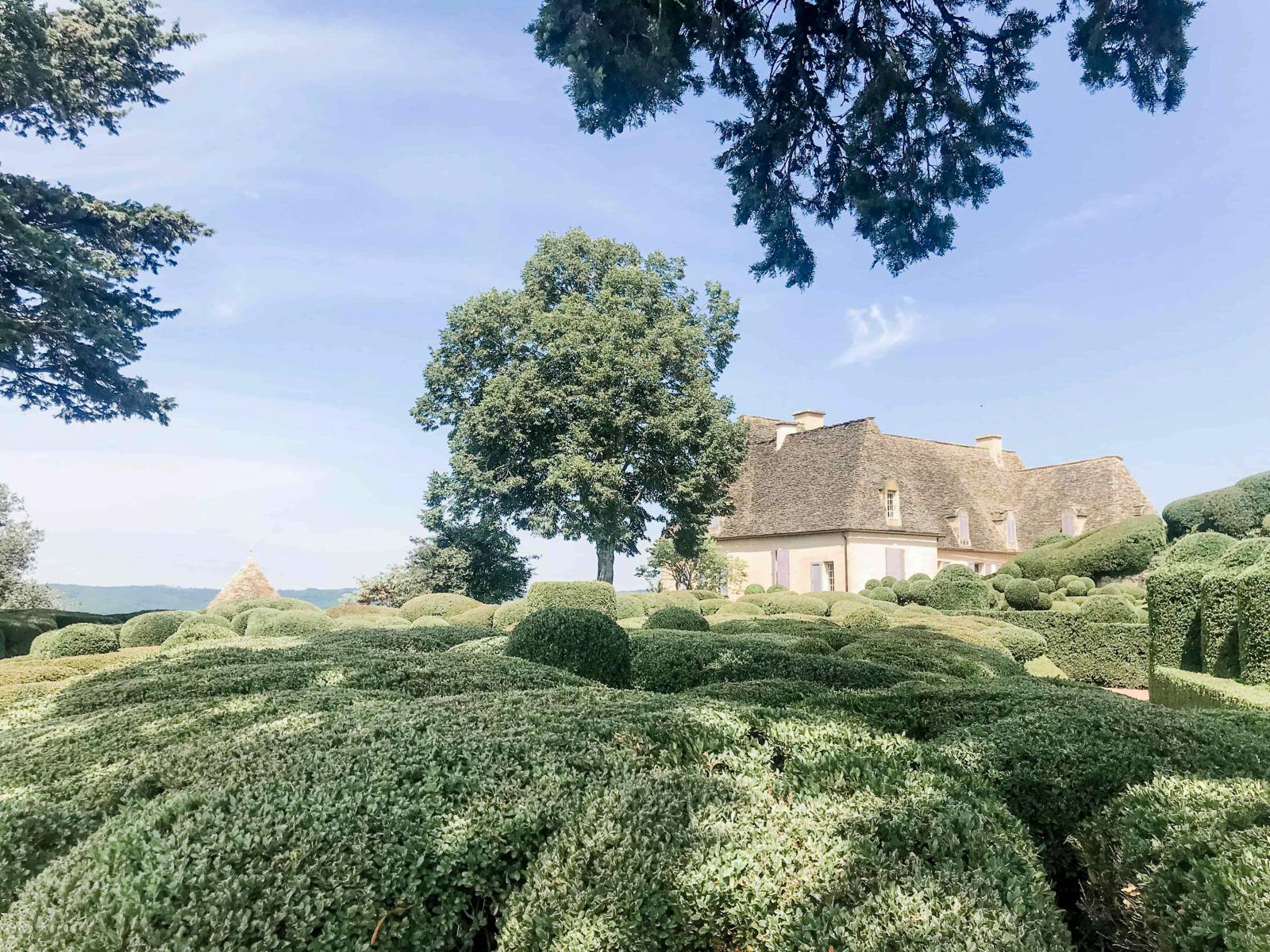
The Gardens of Marqueyssac at Vézac is an overhanging garden that overlooks the Dordogne valley, and it’s worth visiting for the views as much as the beautiful gardens themselves. The 4km site is a maze of 150,000 hand-sculpted box hedges, with tame peacocks, children’s play areas, picnic spots and a superb ice cream shop.
We absolutely loved it here. We sat down to cake and tea overlooking the valley with the river below and the châteaux beyond – it’s one of those moments you don’t forget. The belvedere viewpoint at the end of the walk gives a panoramic view over the Dordogne valley, including Beynac, Castelnaud and La Roque-Gageac.
Gardens of Eyrignac Manor
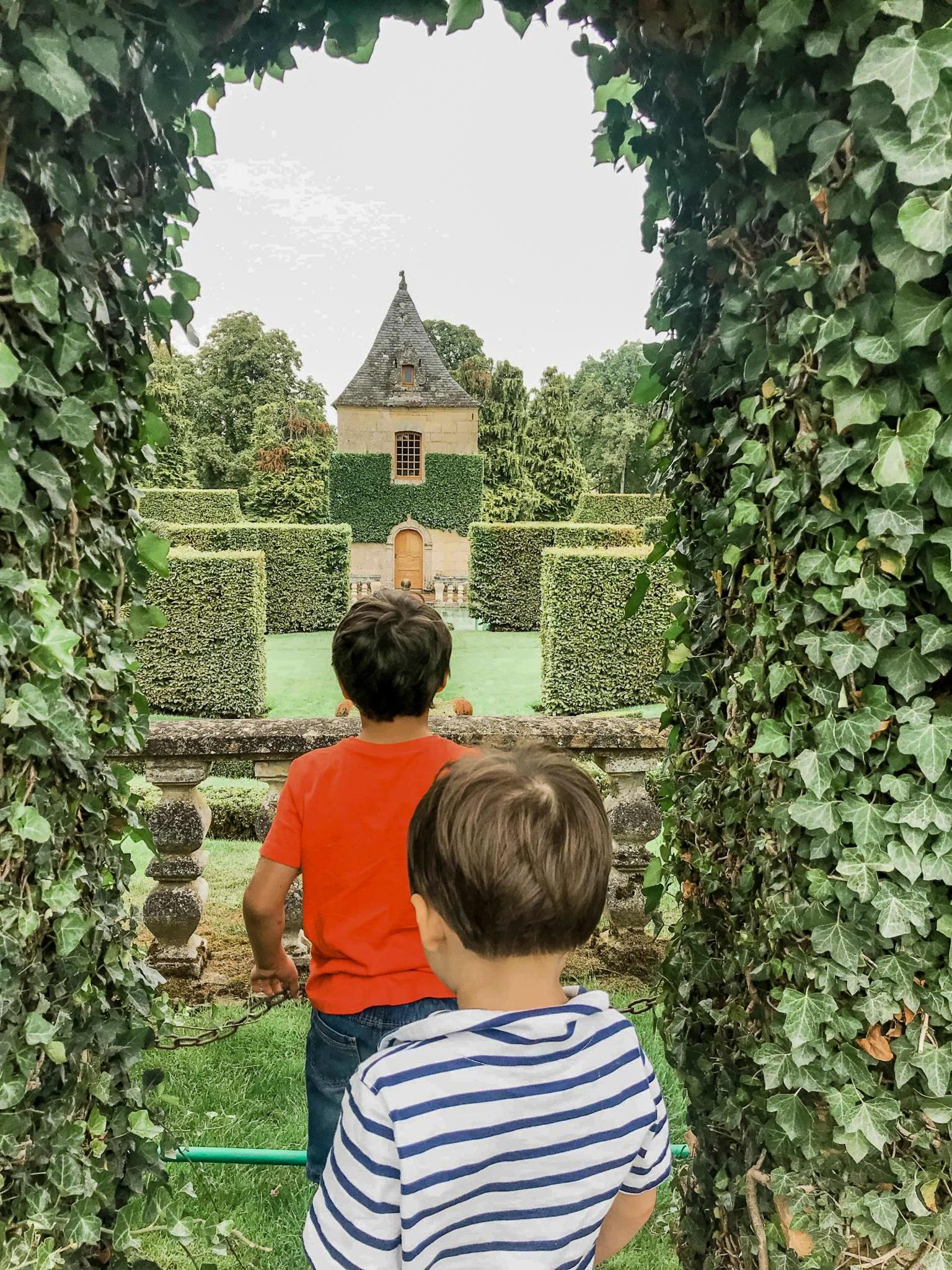
The MTM family has a penchant for gardens, and Eyrignac Manor didn’t disappoint. The children loved finding all the different sculptures dotted around the pristine landscaped gardens, and we enjoyed discovering how the topiary plants are so perfectly manicured – the shapes are fantastical. There are fountains, a Japanese-inspired garden, and a restaurant with homegrown produce. Plenty of little nooks and crannies to discover, and enough open space for kids to run free.
Go back in time at the Château de Bridoire
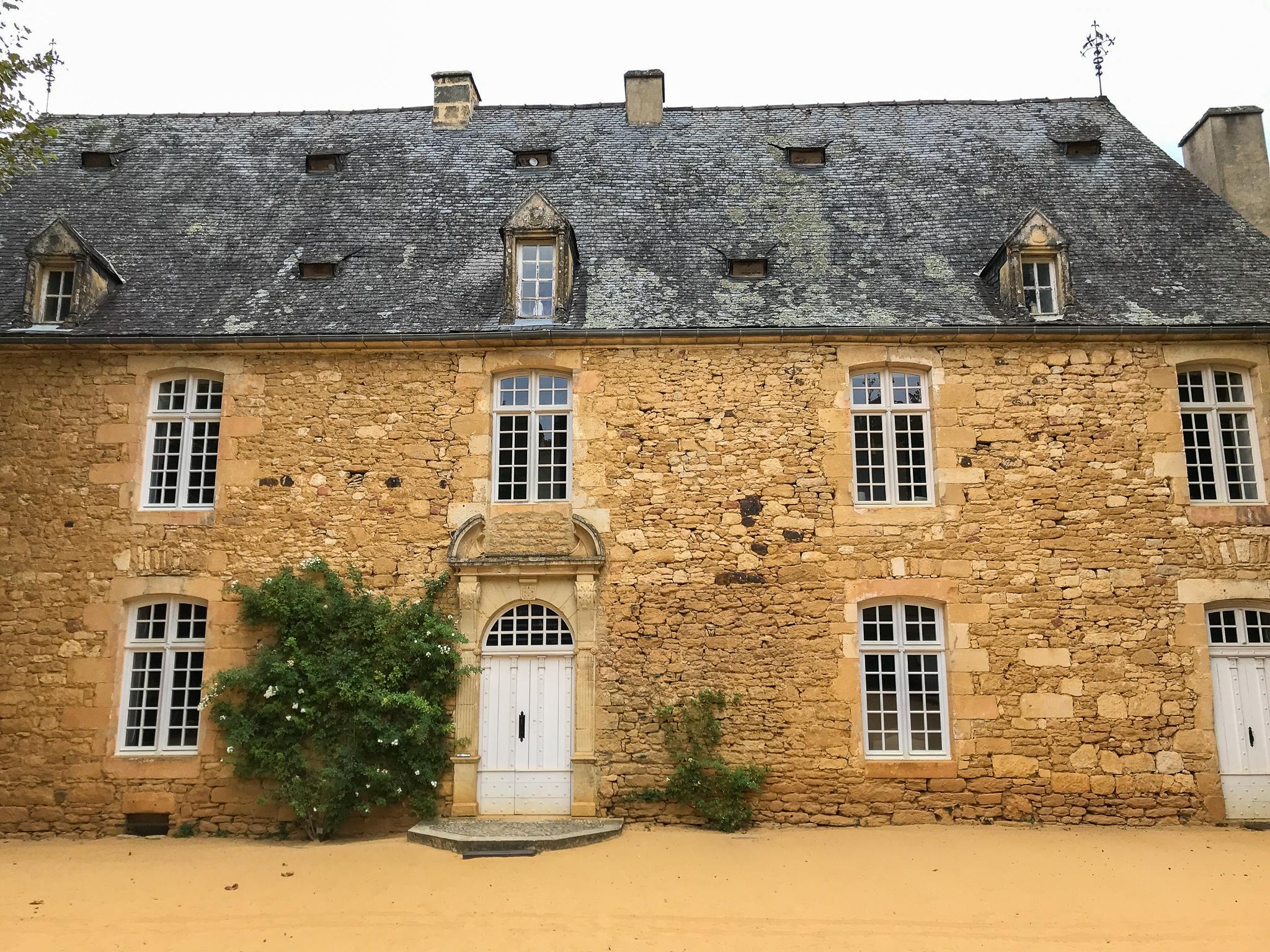
The Château de Bridoire is a brilliant day out for families. The castle brings the past alive with medieval fairground games, giving children the chance to dress up, write with quill pens, fire crossbows, and watch jousting displays. Don’t miss the dungeons and the resident skeleton – our kids talked about it for days.
Explore the Gouffre de Padirac
Technically just across the border in the neighbouring Lot département (about 1.5 hours’ drive from Sarlat), the Gouffre de Padirac is a natural wonder worth the detour. It’s the most visited underground site in France, and for good reason.
The visit begins with a descent of 103 metres (by lift or stairs – 172 steps if you’re feeling brave). You then board a flat-bottomed boat for a cruise along an underground river, past the Grande Pendeloque – a 60-metre-long stalactite – before walking on to the Salle du Grand Dôme, a cavern with a 94-metre-high vault. It’s unlike anything else in the region. Book online in advance, especially in summer. The site is open from late March to early November.

Spend a day at a river beach
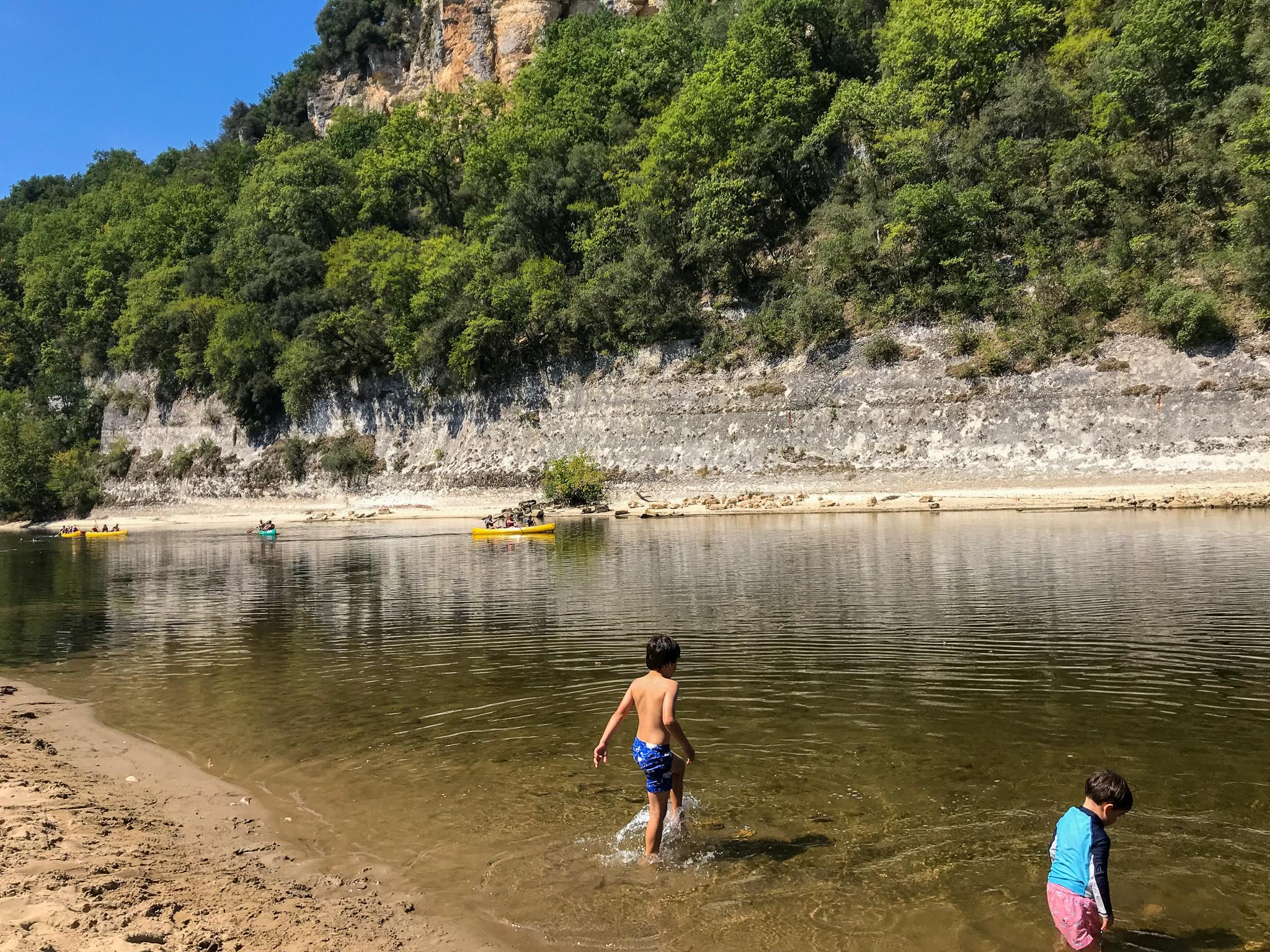
Having asked our hosts at our gîte near Domme where to go, they directed us to a small, rather unknown section of the river with a sandy beach. It felt very much like we were on our own private stretch. The water in the Dordogne river is clean and shallow, and the children adored splashing about, watching the canoes pass and finding fish and frogs.
There are several river beaches along the Dordogne worth seeking out, including Plage de Caudon in Vitrac, Creysse and Plage du Pont de Vicq. On a hot summer day, there’s no better way to cool off.
Eat your way through the Dordogne
The Dordogne isn’t just rich in history – it’s rich in culinary heritage, too. This is a region where food is taken seriously, and the local food markets are the best place to experience it.
Sarlat market
The open-air market in Sarlat-la-Canéda runs every Wednesday morning and all day Saturday in Place de la Liberté and the surrounding medieval streets. The Saturday market is one of the biggest in southwest France and draws crowds from miles around. Get there early to avoid parking problems and grab the best fresh produce.
Expect stalls piled high with foie gras (duck and goose), confit de canard, black truffles (in season, roughly November to March), local cheeses, walnuts and walnut oil, Bergerac wines, fresh bread and pastries. The vendors are happy to let you taste before you buy, and the atmosphere is infectious.
What to eat in the Dordogne
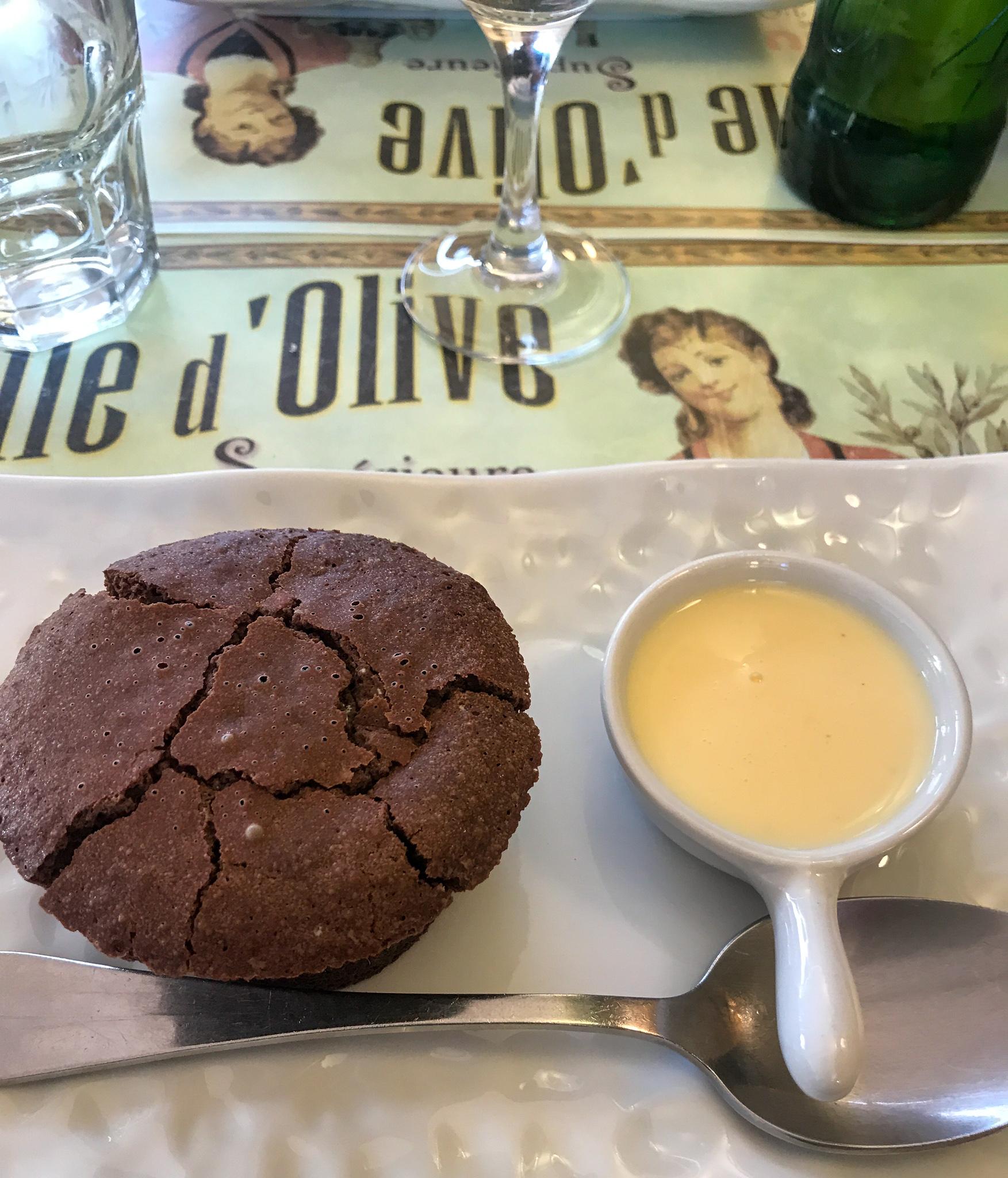
The Dordogne’s greatest hits include foie gras (an emblematic product of the Périgord – you’ll see it everywhere, from market stalls to fine-dining restaurants), confit de canard (slow-cooked duck leg), black truffles (nicknamed the “black gold of Périgord”), walnut cake, and Bergerac wines. For food lovers, this region is hard to beat.
There are smaller local markets across the region throughout the week, and in summer, many villages host evening producers’ markets where you can eat at communal tables. La Roque-Gageac runs a local farm produce market from June to September.
Best time to visit the Dordogne
The summer months (June to September) offer the warmest weather and the longest opening hours at attractions, but July and August are peak season – expect crowds at the most popular villages and caves, and higher accommodation prices. June and September are ideal – warm enough for river swimming, canoeing, water parks and other outdoor activities, but quieter and more affordable.
Spring (April and May) is lovely for walking and exploring the villages without the summer crowds, though some attractions have shorter hours. Winter is truffle season in Sarlat (November to March), which is a draw in itself.
Getting around the Dordogne
A car is essential. Public transport in the Dordogne is very limited, and the main attractions are spread across the rural countryside linked by winding roads. Most visitors base themselves in or near Sarlat-la-Canéda, which puts you within easy reach of the major châteaux, caves and villages. Allow more time than you’d expect for driving in peak season – the narrow roads can get busy, particularly in July and August.
Where to stay in the Dordogne
We stayed in a lovely gîte close to Domme, and being in the heart of the Dordogne valley meant we could reach most attractions within 20-30 minutes. Sarlat-la-Canéda is the most popular base and has the widest choice of accommodation, from hotels and B&Bs to self-catering properties. For a quieter stay, look at villages like Beynac-et-Cazenac, La Roque-Gageac or Domme – you’ll be surrounded by the scenery rather than looking at it from a car.
Frequently asked questions
How many days do you need in the Dordogne?
A minimum of four to five days gives you enough time to see the major caves, castles, villages and markets without rushing. A full week lets you explore at a slower pace, including canoeing, river beaches and day trips to sites like the Gouffre de Padirac.
Is the Dordogne good for families?
It’s one of the best family destinations in France. Between the prehistoric caves, castle visits, canoeing, treetop adventures, river swimming and gardens, there’s plenty to keep children of all ages entertained.

What is the Dordogne known for?
The Dordogne region in southwest France is known for its prehistoric caves (including Lascaux), medieval castles, beautiful villages, the Dordogne river, and its culinary heritage – particularly foie gras, black truffles, walnut products and Bergerac wines.
When is truffle season in the Dordogne?
Black truffle (Tuber melanosporum) season runs from roughly November to March. Sarlat holds a dedicated truffle market on the town hall square each Wednesday and Saturday morning during this period. The annual Truffle Festival takes place in January.
Can you visit the Dordogne without a car?
It’s difficult. Public transport is very limited in the Dordogne, and most caves, castles and villages are only accessible by car. Hiring a car is strongly recommended.
What is the most beautiful village in the Dordogne?
La Roque-Gageac, Beynac-et-Cazenac and Domme are all classified among the most beautiful villages of France. La Roque-Gageac, with its golden stone buildings built into a limestone cliff above the Dordogne river, is probably the most photographed.
Comments are closed.